Flamingo Gardens
Old Florida, rescued and blooming
⏱ 2-3 hours👤 All ages$$
Get Tickets
Get Flamingo Gardens Tickets
Skip the line · mobile tickets accepted at the door
The property is a Broward time capsule: Floyd and Jane Wray planted their citrus-and-botanical weekend estate on a hammock island in the Everglades' eastern edge in 1927, and the gardens' bones — the oak canopy now grown monumental, the tropical fruit groves, the arboretum whose trees hold multiple Florida champion titles (a cluster of the state's largest specimens shades the core loop) — survive as some of South Florida's oldest cultivated landscape, with the Wray Home Museum keeping the 1930s weekend-house interior. The sanctuary mission arrived later and took over the identity: licensed as a rescue for native wildlife that cannot be released — injury, imprinting, confiscation — it now runs the full old-Florida cast: the panther and bobcat habitats under the oaks, black bears, river otters, a serious raptor row (eagles, owls, caracaras from the bird hospital's permanent wing), gators and crocs in the wetland exhibits, and peacocks running unsupervised public relations.
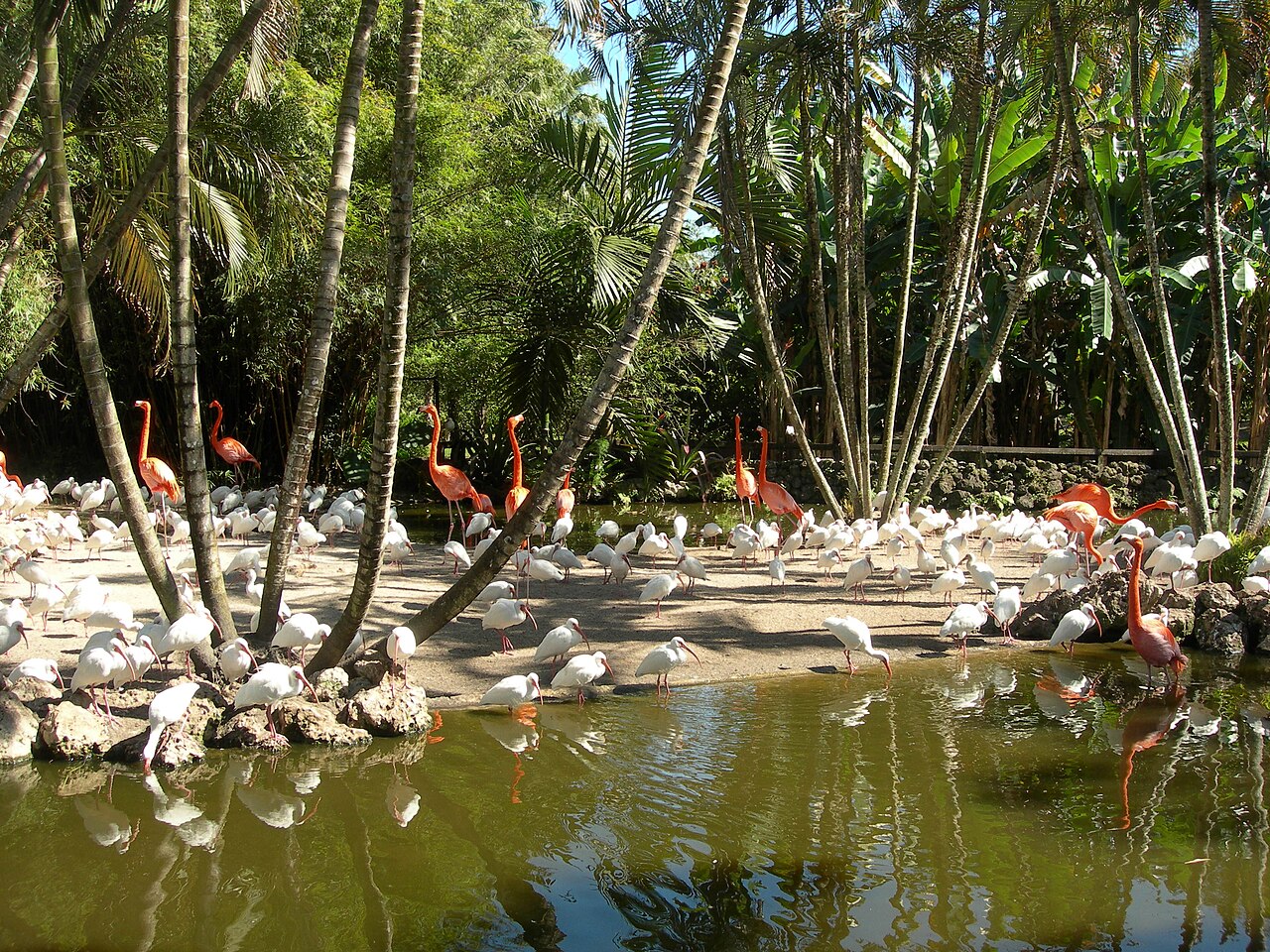
The flamingos supply the name and the photos — the Caribbean flock holds its lagoon by the entrance, close enough that the color reads surreal — but the Everglades aviary is the institution's masterpiece: a netted acre of cypress and pond where roseate spoonbills, wood storks, ibis, herons, and egrets go about their business at arm's length, the closest most visitors will ever stand to the wading-bird cast the real Everglades keeps at telephoto distance. Keeper talks run the daily schedule (the panther and otter feedings draw the crowds; the bird-hospital talks carry the mission), and the narrated tram — the classic way to cover the back acreage — tours the groves, champion trees, and native hammock with volunteer-docent charm.
Craft and fit: mornings bring animal activity and manageable heat (the oak canopy makes afternoons survivable but summer middays still slow the mammals); two-to-three hours covers gardens, aviary, and a feeding talk, with the tram adding the half-hour that completes it. The Davie location — twenty-five minutes west of the beach, fifteen east of the U.S. 27 airboat parks — makes the pairing this market recommends outright: airboat morning, sanctuary afternoon, one wildlife day covering the ecosystem wild and rescued. Admission is modest, the mission is real (the ticket funds the hospital), and the exit through the flamingo lagoon at golden hour is the day's photograph.
What to Expect
Format
A 1927 botanical estate turned native-wildlife sanctuary — flamingos at conversational range, rescued panthers, bears and otters, the walk-through Everglades aviary, champion trees, and the narrated tram. Two-to-three hours in Davie.
Best Time
Mornings for animal activity and kinder heat; feeding-talk times set the day's routing. Golden hour at the flamingo lagoon closes it photogenically.
Duration
Two to three hours, tram included.
Tips
Route around the posted keeper talks — the panther and otter feedings are the anchors. Walk the aviary slowly; the spoonbills reward patience. Take the tram for the champion trees. Pair with the airboat parks fifteen minutes west for the full wildlife day.
⚡ Quick Picks
Best For
Wildlife-first travelers — the rescued half of the Everglades story, told under century-old oaks.
Families
Flamingos underfoot, otters at feeding time, and a tram ride — gentler pacing than the theme-park tier and better animals.
Couples
The aviary's quiet acre and the garden loops run unexpectedly romantic at opening hour.
Pair With
An airboat morning on U.S. 27 — wild ecosystem by boat, its rescues by footpath, one day.
Time Needed
A half day with the drive.
Ready to book Flamingo Gardens?
Get Tickets →Frequently Asked Questions
Are the animals rescues?
Nearly all — the sanctuary houses native wildlife that can't be released (injury, imprinting, confiscation), panthers to pelicans, and the keeper talks tell each case. Admission funds the bird hospital.
What's the walk-through aviary like?
A netted acre of cypress wetland where spoonbills, storks, ibis, and herons carry on at arm's length — the closest encounter with the Everglades' wading-bird cast available anywhere.
How do the flamingos behave?
Like landlords — the flock patrols its entrance lagoon at close range all day, and golden hour turns the pink operatic. The photos take themselves.
Is the tram worth it?
For the champion trees and the estate's back sixty, yes — a narrated half hour of state-record giants and grove history that walking skips.
How does it pair with the airboats?
Perfectly — the U.S. 27 parks sit fifteen minutes west, so the recommended wildlife day runs airboat morning, sanctuary afternoon: the ecosystem wild, then rescued.
More Fort Lauderdale Attractions
Browse all →
Everglades Airboat Tour
The gator show forty minutes from the beach — airboats skim the sawgrass river west of the city, wild alligators sunning the levees, with the roar, the spin, and the guide who knows every bull gator by name. Florida's loudest essential.

Butterfly World
The first and still the largest butterfly park on earth — Coconut Creek's aviaries hold thousands of free-flying butterflies in tropical bloom, plus hummingbirds, lorikeets that land on you, and the research legacy that repopulated whole species.
Hugh Taylor Birch State Park
The green mile the condos couldn't buy — a lawyer's beloved barrier-island estate deeded to Florida to spite developers, now 180 acres of hammock trails, a paddleable lagoon, gopher tortoises, and a tunnel under A1A straight to the sand.